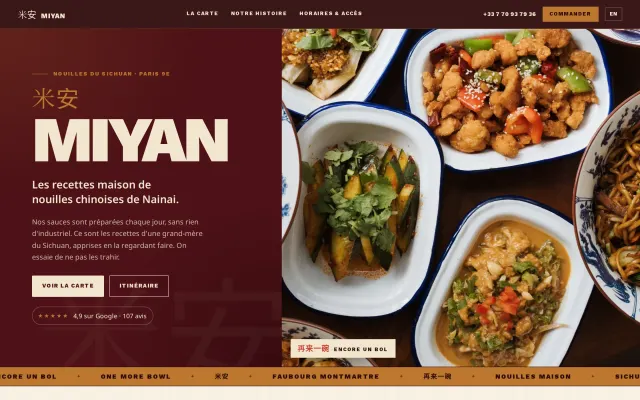
People decide with a phone in their hand and in about two minutes: what you serve, opening hours, photos, and whether they can book or order. Hiding the menu inside a PDF loses you exactly those two minutes.
The occasion matters more than the cuisine: weekday lunch, a birthday, the terrace, gluten free, a family Sunday. Each one is a separate search and deserves its own paragraph on the site.
A menu from two years ago costs more than no menu at all: the prices are wrong, half the dishes are gone and the impression is of a place that has closed. What is on the page has to be what is on the pass tonight.
Allergens and dietary options deserve a page, not a footnote. The person who has to check is usually the one choosing for the whole table, and a clear answer wins the whole group rather than one order.
Explain the format properly. How long the meal takes, roughly how many courses, whether drinks are separate and what the fixed price includes removes every reason to hesitate.
Set the etiquette gently. Arriving on time because the sitting starts together, eating each piece when it is placed, and photography rules are worth saying without being severe about it.
Be clear about sourcing. Which fish arrives when, that the selection changes with the market and that some things are unavailable is the argument for trusting the chef in the first place.
State the requirements at booking. Allergies, pregnancy and what somebody will not eat have to be known days before, because the shopping happens before the guest arrives.
Show the real total. Drinks, a sake pairing, tea and service turn a headline price into something noticeably larger, and printing the likely all-in figure costs a few bookings while saving every review.
The counter has eight or ten seats and one or two sittings. Every empty stool is unrecoverable, which is why booking, deposits and cancellation terms belong on the site stated plainly.
Dietary requirements must be known when booking, not on arrival. The chef buys for the people who said they were coming, so an allergy mentioned at the counter cannot always be accommodated.
Written to remove the hesitation before a fixed-price meal: the format explained, the etiquette set gently, sourcing described and dietary requirements requested at booking.
The sentence that makes a stranger book: you do not choose, and here is exactly what that means.
Your website will load fast, look flawless on any phone and be easy to edit. We take care of the design, photos and copy so your omakase restaurant projects the professional image it deserves.
An invisible website is useless. We work the local SEO of your omakase restaurant — copy, speed, Google Business Profile and reviews — so you appear right when a customer in your city needs you. And with Google Ads, from day one too.