The gallery does the selling here, and it needs both halves: the space empty, so people can imagine their own event, and the space set up, so they can see it working. With the capacity for each layout written next to it.
A wedding, a company away-day and a christening are three budgets and three different clients. Thrown together on one page you speak to none of them; kept apart, each gets its own price range and its own photos.
Every enquiry begins with the same three facts: how many fit, is the date free, and what the price covers. A capacity table and an availability calendar answer them before anyone writes, so the enquiries that arrive are worth answering.
Whether people can bring their own caterer, their own music or their own decorator is the question that decides between two venues. Say what is exclusive and what is open, and the enquiries stop dying at the second email.
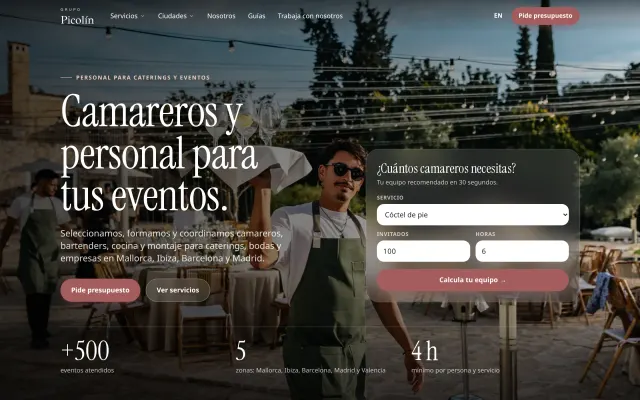
Explain how food reaches a difficult venue. Marquees, village halls and buildings with no kitchen are where most events happen, and describing the equipment and the method is more convincing than another photograph of a canapé.
Break the price down. Separating food, staff, hire and travel lets a client compare properly, and it prevents the quote that looks expensive next to one that omitted half the costs.
Take allergens seriously in writing. Separate preparation, labelling and what happens when a requirement changes late shows a kitchen that has managed it before rather than one that will improvise.
Write each occasion separately. A wedding, a funeral and a corporate lunch differ in tone, timing and budget, and one page addressed to all three sounds convincing to none of them.
Nobody can taste a photograph. What actually reassures a client is logistics: serving a hundred and twenty people in a field with no kitchen, on time and hot, described in enough detail to be believed.
Dietary requirements are no longer a footnote. How allergens are handled, and whether a vegan guest gets an afterthought or a dish, is checked by anybody organising for a group.
Written around what actually worries an organiser: how the food reaches a venue with no kitchen, a real price breakdown, allergens handled seriously and each occasion written separately.
The detail that closes the booking is unglamorous: a hundred and twenty plates, hot, in a field.
We work with the technology that best fits your catering company: WordPress, WooCommerce or bespoke development, always with a fast, secure and easy-to-manage website. We hand it over ready and, if you want, train you to run it yourself.
Your website will appear on Google when people search for a catering company in your area, because we design it optimised for local rankings from the ground up. A website that gets found and converts: that's the plan.