Web design · Sport & fitness

Web design for surf schools

Every booking here is made against a weather forecast, so the cancellation policy is not small print — it is the product. What happens if the sea is flat, or too big, decides whether somebody books at all.

What stops most people is not the price, it is walking in the first time. Photos of the actual room, what to bring, where to change and how busy it is at seven in the evening remove more objections than any offer.

The timetable is the most visited page on the whole site. As an image or a PDF, Google cannot read it and phones display it badly; as a page, it brings sign-ups.

Behind every enquiry sits the same question: how easy is it to leave. Contract length, notice period and whether a first session costs anything get searched for before anybody looks at the classes.

The practical detail decides the first visit: changing rooms, showers, lockers, parking, whether there is somewhere to leave a bike. It is what people check on the way out of the price page.

Say what happens when conditions are wrong. Rescheduling, a different beach, a credit valid all season: knowing there is a plan removes the risk that stops a booking being made in the first place.

Kit is the beginner's real worry. Wetsuit and board included, what to bring, what the water is like in April compared with August: practical detail is what turns a maybe into a booking.

Group size is a safety statement. How many students per instructor, what qualifications they hold and who is watching the water: parents read this closely and almost no school writes it down.

Gift vouchers carry the winter. A lesson is an easy present, it is bought in December for the following summer, and it is money in the bank during the months when nobody is in the water.

First-timers have three questions and none of them are about surfing: what do I wear, how cold is the water, and will I actually stand up. Answer those and the beginner lesson sells itself.

Two completely different customers arrive: the holidaymaker who wants one morning and the local who wants to learn properly. One books tonight for tomorrow, the other books a course for the season.

The site is built around the forecast: what happens if the sea does not cooperate, the kit included, the ratio per instructor, and booking that works from a phone on the beach.

Two audiences, two paths: one morning on holiday or a course that lasts the season.

A website that loads in a blink, looks perfect on mobile and conveys the professionalism of your surf school at first glance. Custom design, clean code and a simple panel so you stay in control.

Reviews and your Google profile decide many visits to a surf school. We work your Google Business Profile, reviews and website SEO together, so when people search for you in your city, you appear — first and well rated.
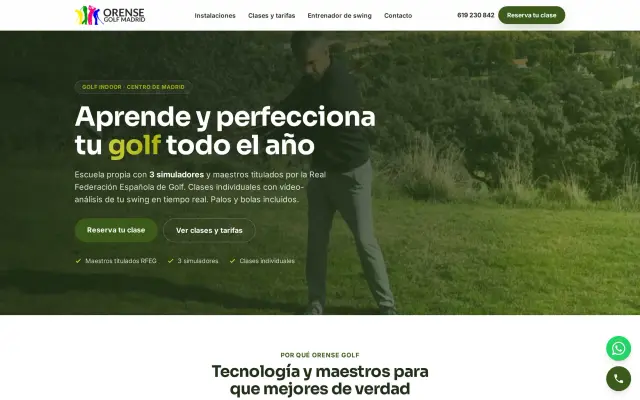
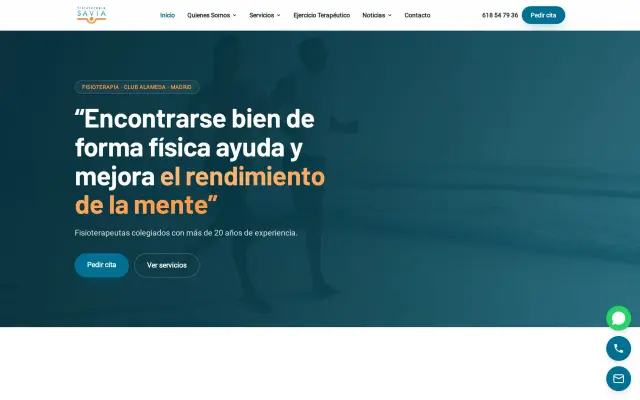
In brief: web design for surf schools

  • If something goes down, yesterday's backup takes over: phone number and address are reachable again in minutes.
  • Your own photographs beat any stock library; where they are missing we say so rather than paper over it.
  • You change texts, prices and photos yourself from a simple panel, with no technical know-how.
  • Not a brochure but a tool: it takes enquiries while you are working.

⚙️ Not just a website, a tool

A website for a surf school is not a brochure: it is where somebody decides whether to call you. Everything on it should serve that one decision.

What your website includes

Tides, and why the lesson time moves

Why a Saturday lesson is at seven one week and noon the next.

Hiring between lessons

Board and suit for the afternoon, and what that costs.

The beach, the car park and where to meet

Getting there, changing, and the walk with a board.

Past the first wave

What the second and third lessons add, and when to stop paying for them.

A week of it: surf camps

Consecutive days, and why they work better than one a month.

How well you need to swim

What we need to know before anybody goes in.

How we work with surf schools, step by step

  1. 1

    We look at your business

    We pin down what the site has to produce: calls, bookings, enquiries with a photo attached.

  2. 2

    Structure and content

    We give each service its own page, so it can be found on its own terms.

  3. 3

    Design and build

    We set type, contrast and sizes so the site still reads in bright sun and at sixty.

  4. 4

    Launch and Google

    We look at the numbers after four weeks and fix the places where visitors drop out.

  5. 5

    Handed over working

    You get the panel, we show you how to use it, and we stay available for whatever comes up.

Frequently asked questions about web design for surf schools

Why is the cancellation policy so important here? +

Because every booking is a bet on the sea. Knowing there is a reschedule or a season-long credit if conditions are wrong removes the risk that otherwise stops people booking in advance at all.

What do beginners actually want to know? +

What to wear, how cold the water is and whether they will manage to stand up. None of those are about surfing, and answering them plainly is what fills a summer course.

Should instructor ratios be published? +

Parents look for exactly that. Students per instructor, the qualifications held and who is watching from the beach is information hardly any school writes, and it decides bookings for under-sixteens.

Do gift vouchers matter for a surf school? +

They pay for the winter. A lesson makes an easy present, it is bought in December for the following summer, and it brings in money during the months with no lessons at all.

What has to be on the first screen? +

The timetable, the price and the trial. Everything else can wait; those three are what people came for.

Do we need an app? +

Almost never. A site that books from a phone does the same job without asking anyone to install anything.

Can people see the timetable without an account? +

They should. Asking someone to register before they can see when classes run loses most of them at that step.

Can members cancel online? +

Yes, and they should be able to. Making it easy to leave reads as confidence and costs less than the complaints and chargebacks that come from a cancellation process nobody can find.

Who writes the texts if my English is not perfect? +

We do, and then you read them aloud. If a sentence does not sound like you, it does not stay — the site has to survive a customer quoting it back.

How many revisions are included? +

Two rounds before launch, and the small fixes afterwards without counting. What is not included is redesigning it twice, and we say so before starting.

Can you keep my current domain? +

Yes, and we prefer it. Losing a domain that has been printed on vans and business cards costs more than any redesign gains.

Much more than a website

Not just your website. Your centre's panel.

Class bookings, your members and automatic reminders — the schedule always full.

Customer CRM

Every contact that comes through your website lands in your panel, with follow-up and notes. Nothing gets lost.

Bookings & appointments

Online diary with automatic reminders. Your customers book themselves, you see your calendar fill up.

Email marketing

Your own campaigns and lists to build loyalty and sell again, with no paid external tools.

AI assistant

A smart chat serves and captures customers on your website 24/7, and passes the interested ones to your CRM.

Clear analytics

How many visit you and where they come from, with no jargon or annoying cookies. Decisions backed by data.

All under your brand, in one place.

I want my panel
Real projects

Sites of ours that are already up and running

Out of respect for our clients we show each project by its sector and city, with no names.

See the full portfolio →

Ready for a website that works?

Tell us about your surf school and we'll prepare a no-obligation quote.

We reply within 24 hours · No obligation

WhatsApp ·