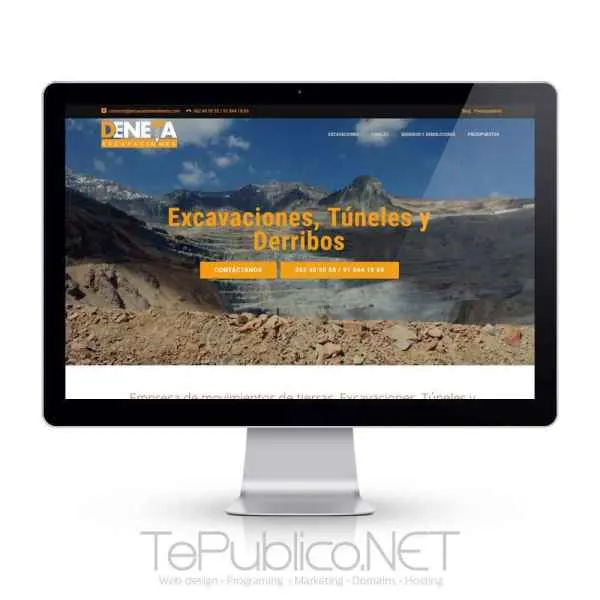
Industry & trades · TePublico.NET

Web design for industrial pneumatics companies

There are two buyers: the one after a spare and the one designing a cell. They need different pages.

The buyer who finds you has a drawing on the desk and very little time. They search by process, material and capacity — and decide in two minutes whether to send an enquiry or move on to the next supplier.

Trust here is earned with numbers, not adjectives: tolerances, machine list, certifications, the batch sizes you normally run. Publish them and you get taken seriously; write "quality and experience" and you get skipped.

The enquiry worth having arrives with a file attached. If the site cannot take a drawing, a spec sheet or a photo of the part on the bench, the buyer sends it to somebody who can, and the quote gets written somewhere else.

Show the workshop as it is. Real photographs of the machines, the bay and a finished part say more about capacity than any list, and they are what convinces a buyer who has been sent glossy renders by everyone else.

There are two buyers here and the site usually serves one. Somebody after a spare wants to type a reference and see the equivalent and the stock; somebody designing a cell wants bore, stroke, pressure and flow to choose from. Separating those two paths is half the business.

Dirty compressed air is the failure that repeats and that nobody connects to its cause. Water and oil in the line, filtration and drying, what a badly set lubricator does, and why a cylinder that lasts two months is not a bad cylinder: without saying it, you sell the same part three times.

Stopping a machine to measure costs more than the part. That identification works from a photograph of the plate and the fittings, which dimensions to take before anything is removed, and what can be settled on the phone with somebody standing at the equipment.

Publish the fittings and thread standards you stock. Half of a maintenance engineer's frustration is a cylinder that arrives with the wrong port, and a page that states threads, tube sizes and what adapters exist saves a second delivery.

We think of your website as another team member: with online catalogue and enquiries working 24/7, plus quotes and orders and quotes and orders. You focus on your industrial pneumatics company; the website handles capturing and serving.

We work with the technology that best fits your industrial pneumatics company: WordPress, WooCommerce or bespoke development, always with a fast, secure and easy-to-manage website. We hand it over ready and, if you want, train you to run it yourself.

A pretty website is no use if no one finds it. That's why your page is built optimised for SEO and local rankings: when someone searches for your industrial pneumatics company in your city, you show up. We can also run your Google Business Profile and Google Ads campaigns.

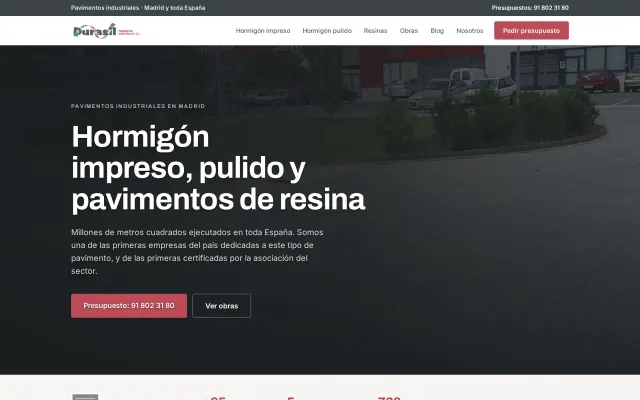
In brief: web design for industrial pneumatics companies

  • Perfect on a phone: that is where industrial pneumatics companies get found, and where the decision is made.
  • If something goes down, yesterday's backup takes over: phone number and address are reachable again in minutes.
  • Built for Google from the ground up, so people find you rather than merely visit.
  • A privacy policy and a cookie notice that loads only what is needed are part of the job, not of your to-do list.

⚙️ Not just a website, a tool

You own it and you run it. Texts, prices and photos change from a panel, without depending on anyone and without waiting.

What your website includes

One fitting, or a whole cell

Two customers, two pages, two prices.

Cross-referencing a discontinued part

Finding the equivalent from an old code.

Water in the line

Dryers, drains and the fault everybody blames on valves.

Sizing a cylinder properly

Bore, stroke and force, instead of copying the last one.

Valves, manifolds and the wiring

Where a build stops being a parts list.

Off the shelf, or built and tested

Assembly, documentation and what that adds.

How we work with industrial pneumatics companies, step by step

  1. 1

    We look at your business

    We pin down what the site has to produce: calls, bookings, enquiries with a photo attached.

  2. 2

    Structure and content

    We decide which questions the page answers up front: price range, how it works, hours, parking.

  3. 3

    Design and build

    We keep the ways to reach you visible — call, message, book — on every screen size.

  4. 4

    Launch and Google

    We submit the site to Google and check a few days later what is actually indexed.

  5. 5

    Handed over working

    The domain and the hosting stay in your name — you can take the site elsewhere whenever you want.

Frequently asked questions about web design for industrial pneumatics companies

This part is discontinued — is there an equivalent? +

Cross-referencing from an old code is a service worth naming. Say what information you need to identify it.

Can you build and test an assembly? +

Explain what comes assembled, what documentation is included and how it is tested. It sells to the engineer who has no time to build it.

Do you sell single items? +

Say so plainly. The customer who orders one fitting today specifies the whole cell next year.

Do we have to publish prices? +

No, and in this sector it rarely helps. A minimum order, usual lead times and the materials you work with filter enquiries just as well.

Can customers upload a drawing? +

Yes. A form that takes the drawing in PDF or CAD and asks for quantity and material saves the four emails that usually follow.

Can technical datasheets be kept behind a login? +

Behind a form or a client password. What brings visitors stays public; what gets negotiated does not.

Can we keep the site out of search until it is ready? +

Yes, and we do it by default while it is being built. What matters is remembering to switch it back on at launch: a site left blocked ranks for nothing, and it is the most common own goal in this business.

Can I manage the website myself, or do you handle it? +

Whichever you prefer. We hand over the website ready and, if you want, train you to edit it yourself. And if you'd rather delegate, we take care of maintenance and keeping it up to date for you.

How long does it take? +

A website for your industrial pneumatics company is usually ready in 1 to 3 weeks once we have the content. We give you a fixed timeline up front.

Will it appear on Google? +

Yes. We design every website optimised for local SEO from the ground up, so your industrial pneumatics company appears when people search for you in your city. We can also run an ongoing rankings plan.

Do you work with customers abroad? +

Yes. We handle the whole project remotely, fast and conveniently, with industrial pneumatics companies across the English-speaking world.

Much more than a website

Not just your website. Your panel so no quote is lost.

Every request that comes through the website lands in your CRM with follow-up; nothing goes unanswered.

Customer CRM

Every contact that comes through your website lands in your panel, with follow-up and notes. Nothing gets lost.

Bookings & appointments

Online diary with automatic reminders. Your customers book themselves, you see your calendar fill up.

Email marketing

Your own campaigns and lists to build loyalty and sell again, with no paid external tools.

AI assistant

A smart chat serves and captures customers on your website 24/7, and passes the interested ones to your CRM.

Clear analytics

How many visit you and where they come from, with no jargon or annoying cookies. Decisions backed by data.

All under your brand, in one place.

I want my panel
Real projects

Sites of ours that are already up and running

Out of respect for our clients we show each project by its sector and city, with no names.

See the full portfolio →

Ready for a website that works?

Tell us about your industrial pneumatics company and we'll prepare a no-obligation quote.

We reply within 24 hours · No obligation

WhatsApp ·