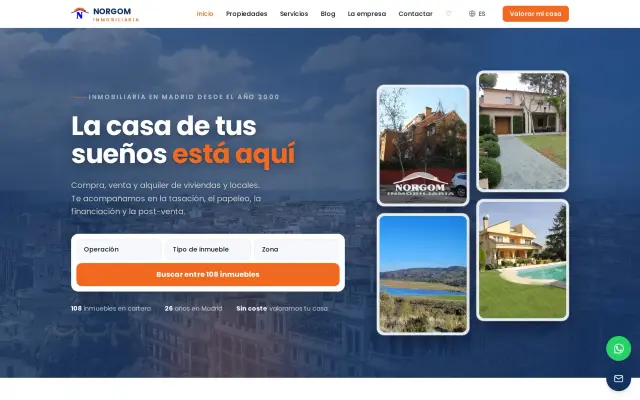
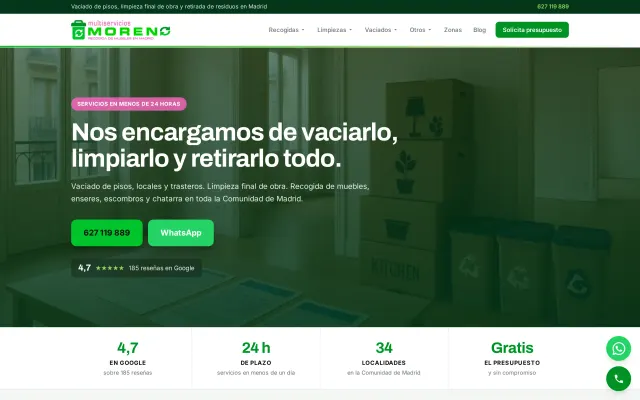
Two opposite intentions land on the same page: selling and buying. Not separating them loses both — one came for a valuation, the other came for listings.
Each property page is a landing page in its own right: it is where people arrive from a search and where they decide. Floor plan, honest photos, what the neighbourhood is like, and a way to book a viewing without picking up the phone.
The valuation is the enquiry worth having, and it is won with local numbers: what has sold in that street, how long it took, asking price against final price. A generic free-valuation button gets ignored.
Sellers are buying your marketing, not your office. Say how you photograph, where you list, how viewings are handled and what happens in the first two weeks — that is what they are comparing between two agencies.
«Does it actually sell faster or is it just a cost?» is the seller's only question and it deserves numbers rather than photographs. What data exists on time on market and on the gap between asking and achieved price, what can honestly be said from your own history, and the properties you turn down because they will sell without you.
Whether furniture is rented or stays is half the budget and is almost never explained. What is hired and for how many weeks, what is bought and remains, what applies if the sale takes four months, and the cost of extending.
Half the properties on the market are occupied, and this trade talks as though they were all empty. What can be done with the owner's own furniture, how much goes into storage and who pays, how somebody lives in a home kept ready for viewings, and what happens to the family photographs and the dog.
Say who the buyer is before styling for them. A two-bed near a university and a family house on the edge of town need opposite decisions, and a stager who starts from the likely buyer rather than a look is the one estate agents call again.
Every site we design for home staging companies is built to convert: online enquiries and quotes, services and portfolio and services and portfolio, with an experience so simple your customer books or gets in touch without hesitating.
We work with the technology that best fits your home staging company: WordPress, WooCommerce or bespoke development, always with a fast, secure and easy-to-manage website. We hand it over ready and, if you want, train you to run it yourself.
A pretty website is no use if no one finds it. That's why your page is built optimised for SEO and local rankings: when someone searches for your home staging company in your city, you show up. We can also run your Google Business Profile and Google Ads campaigns.