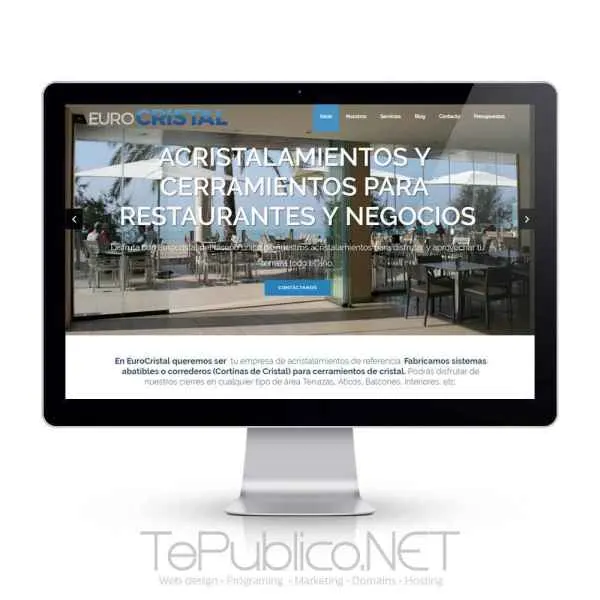
Web design · Industry & trades

Web design for galvanising companies

Kettle dimensions get asked before welding. Publishing them saves half the phone calls.

The buyer who finds you has a drawing on the desk and very little time. They search by process, material and capacity — and decide in two minutes whether to send an enquiry or move on to the next supplier.

Trust here is earned with numbers, not adjectives: tolerances, machine list, certifications, the batch sizes you normally run. Publish them and you get taken seriously; write "quality and experience" and you get skipped.

The enquiry worth having arrives with a file attached. If the site cannot take a drawing, a spec sheet or a photo of the part on the bench, the buyer sends it to somebody who can, and the quote gets written somewhere else.

Show the workshop as it is. Real photographs of the machines, the bay and a finished part say more about capacity than any list, and they are what convinces a buyer who has been sent glossy renders by everyone else.

«What size of part fits in the bath?» Before price, the kettle decides. What usable dimensions the kettle has and what double dipping solves, what maximum weight is handled in one lift, what becomes of a structure that only just fits and where the mark stays, and why the dimensions are asked for before welding rather than after.

«Is it charged by weight or by piece?» This is where the large gaps between quotes come from. That payment is by kilo of steel and why a light part with a large surface costs proportionally more, which minimums apply per load and per delivery, which preparation work is billed separately, and how to estimate the zinc a part will take.

«Will the part distort, or come out patchy?» That is the classic complaint, and it nearly always originates on the drawing. Which vent and drainage holes to provide and where, why thin sheet warps under thermal shock and how to design against it, which appearance is normal and which counts as a defect under the standard, and what can be touched up afterwards without destroying the protection.

Put a drawing checklist on the page. Steel grade, plate thickness, vent holes and the date the structure has to be on site: an engineer who ticks those four sends a file that can be priced without a single phone call.

Every site we design for galvanising companies is built to convert: online enquiries and quotes, services and finishes and services and finishes, with an experience so simple your customer books or gets in touch without hesitating.

Your website will look flawless on social media and WhatsApp too: we take care of preview images, copy and speed, so every time you share your galvanising company it makes a good impression and adds customers.

A pretty website is no use if no one finds it. That's why your page is built optimised for SEO and local rankings: when someone searches for your galvanising company in your city, you show up. We can also run your Google Business Profile and Google Ads campaigns.

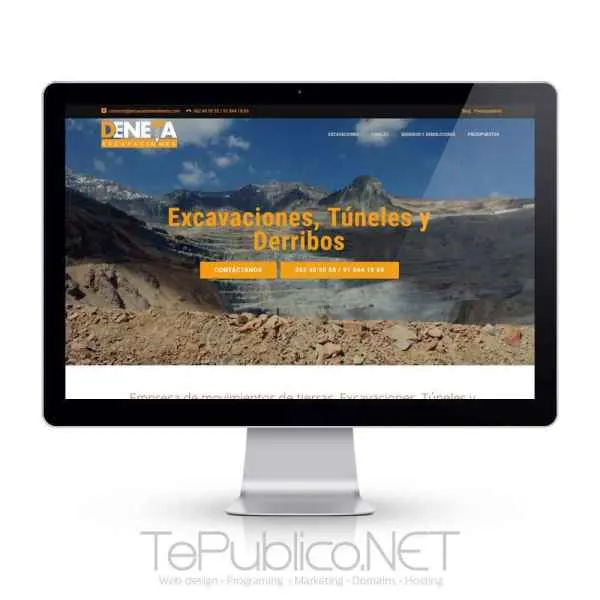
In brief: web design for galvanising companies

  • If something goes down, yesterday's backup takes over: phone number and address are reachable again in minutes.
  • Perfect on a phone: that is where galvanising companies get found, and where the decision is made.
  • Domain, content and logins stay in your name: you ask nobody's permission the day you want to change something.
  • Domain and hosting are stated upfront; everything else is optional and you decide who handles it.

⚙️ Not just a website, a tool

A website for a galvanising company is not a brochure: it is where somebody decides whether to call you. Everything on it should serve that one decision.

What your website includes

Bath size and what fits

Usable dimensions, double dipping and maximum weight.

Priced by weight, not by piece

Why a light part with large surface costs proportionally more.

Distortion, drainage and finish

Vent holes, thin sheet and what the standard calls a defect.

Designing for galvanising

Details to fix on the drawing rather than at the kettle.

Painting over zinc

When a duplex system is worth it and how it is prepared.

Found by structure and by standard

Somebody searching «hot dip galvanising to EN ISO 1461» finds you.

How we work with galvanising companies, step by step

  1. 1

    We look at your business

    We look at what customers keep asking on the phone — that belongs on the first screen.

  2. 2

    Structure and content

    We write in your words rather than advertising words, and cut anything nobody reads.

  3. 3

    Design and build

    We build for the phone first, because that is where most of your visitors decide.

  4. 4

    Launch and Google

    We test every form from the outside before launch — an enquiry must never fall into a void.

  5. 5

    Handed over working

    You get the panel, we show you how to use it, and we stay available for whatever comes up.

Frequently asked questions about web design for galvanising companies

Is there a minimum charge? +

Give the figure. Small fabricators ring with a handful of brackets and need to know whether it is worth the trip before loading the van.

Can damaged zinc be repaired on site? +

Explain what can be done with paint or spray to a cut or a weld after galvanising, and what that does to the guarantee. It comes up on every project where steel is modified on site.

How long will it be with you? +

Give the normal turnaround and what a rush job involves. Galvanising sits between fabrication and delivery, so days here move somebody else's programme.

Do we have to publish prices? +

No, and in this sector it rarely helps. A minimum order, usual lead times and the materials you work with filter enquiries just as well.

Can customers upload a drawing? +

Yes. A form that takes the drawing in PDF or CAD and asks for quantity and material saves the four emails that usually follow.

Can technical datasheets be kept behind a login? +

Behind a form or a client password. What brings visitors stays public; what gets negotiated does not.

Can we keep the site out of search until it is ready? +

Yes, and we do it by default while it is being built. What matters is remembering to switch it back on at launch: a site left blocked ranks for nothing, and it is the most common own goal in this business.

Who writes the texts if my English is not perfect? +

We do, and then you read them aloud. If a sentence does not sound like you, it does not stay — the site has to survive a customer quoting it back.

How many revisions are included? +

Two rounds before launch, and the small fixes afterwards without counting. What is not included is redesigning it twice, and we say so before starting.

Can you keep my current domain? +

Yes, and we prefer it. Losing a domain that has been printed on vans and business cards costs more than any redesign gains.

Much more than a website

Not just your website. Your panel so no quote is lost.

Every request that comes through the website lands in your CRM with follow-up; nothing goes unanswered.

Customer CRM

Every contact that comes through your website lands in your panel, with follow-up and notes. Nothing gets lost.

Bookings & appointments

Online diary with automatic reminders. Your customers book themselves, you see your calendar fill up.

Email marketing

Your own campaigns and lists to build loyalty and sell again, with no paid external tools.

AI assistant

A smart chat serves and captures customers on your website 24/7, and passes the interested ones to your CRM.

Clear analytics

How many visit you and where they come from, with no jargon or annoying cookies. Decisions backed by data.

All under your brand, in one place.

I want my panel
Real projects

Sites of ours that are already up and running

Out of respect for our clients we show each project by its sector and city, with no names.

See the full portfolio →

Ready for a website that works?

Tell us about your galvanising company and we'll prepare a no-obligation quote.

We reply within 24 hours · No obligation

WhatsApp ·