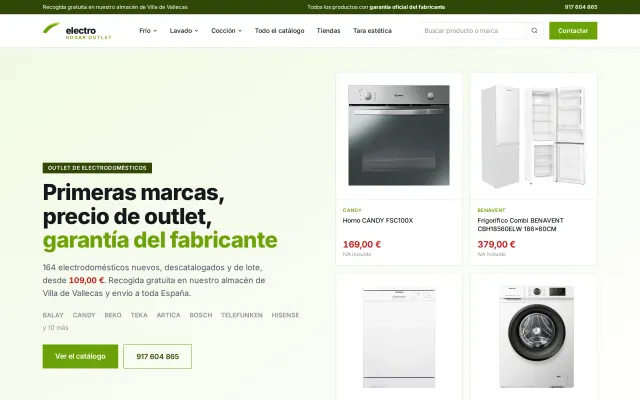
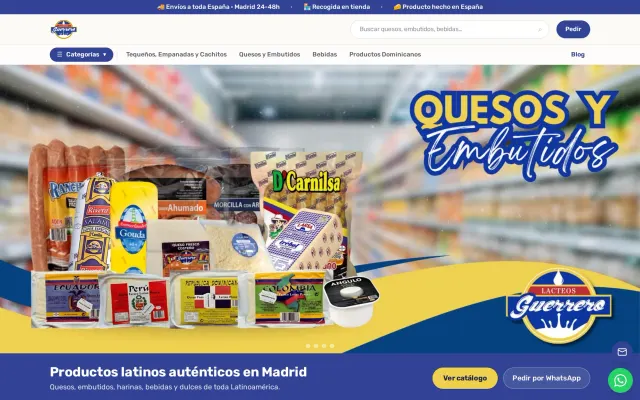
The customer checks online before setting off: whether you stock what they want, what time you open, and whether they can park. A site that hides those three answers sends them to the next shop on the street.
What beats online retail is not price but everything a warehouse cannot do: take it home today, try it on, get advice, bring it back over the counter. That belongs on the website, not only in the shop.
Nobody expects the whole shop online, but they do expect to know whether a size is in. Letting someone ask about one item, or hold it until six, turns a browse into a visit that ends at the till.
Name the brands you stock. People search by brand long before they search by shop, and a page that lists what you actually carry picks up those searches while a page about your history picks up nothing.
Put prices next to the pictures. An arch, a backdrop or a table set is chosen visually and rejected on cost, and hiding the figure only produces enquiries that go nowhere.
Explain the timing of an installation. When the team arrives, how long the build takes, whether the venue allows access and who collects the frame afterwards is what a venue coordinator asks first.
Be honest about float times. Foil against latex, treated against untreated, indoors against a marquee in August: this is the detail that decides whether a customer is delighted or disappointed.
Give business work its own page. Shop openings, window displays and corporate events are repeat customers with invoices and purchase orders, and they read nothing written for a first birthday.
Say how much notice you need. How many days ahead to order, what can still be done for tomorrow morning and the cut-off for a Saturday event answer the question asked most often, and a number for urgent work picks up the best-paid jobs.
Cover colour matching and personalisation. Matching a specific shade to an invitation, printed balloons, custom letters and numbers all carry their own lead times, and saying what needs a week and what does not prevents a disappointed order.
State the minimum order and the delivery area. How far you travel, what the charge is beyond that, whether installation has a minimum and whether the frame is collected afterwards lets somebody work out the real cost before enquiring.
What is being sold is a photograph. Customers choose from an image and then ask what it costs, so pictures with prices attached do more work here than any amount of description.
There are two trades under one roof: balloons handed over the counter, and installations somebody delivers, builds and comes back to take down. The second is a booking with a time slot.
Built around the photograph and the clock: images with prices, installation timings and access, honest float times, and business work separated from parties.
The detail that prevents most complaints costs nothing to publish: how long each type of balloon actually stays up.
No recycled templates: we start from your brand, your colours and your photos to create a unique website for your balloon shop, responsive and lightning-fast. And we leave it ready for you to edit without any technical know-how.
We position you where your customers are: on the first page of Google and on the map, for searches for your balloon shop in your area. Local SEO done well today is what fills your calendar tomorrow.