Web design · Food & agriculture

Web design for artisan charcuterie producers

Curing explains the price: months, weight lost, and what the cut face shows.

In direct sales it is provenance that decides, not price: the farm, the method, the season. Telling that story sells to the people who are deliberately avoiding the supermarket shelf.

Delivery is the first point where the basket gets abandoned: the cold chain, the transit time, what happens in a heatwave. Explained honestly, it stops being a reason to leave.

Two buyers read the same page: the family ordering a box and the shop ordering a pallet. Minimum order, formats and lead time told apart stop each of them wasting the other's time.

Say where else you can be found: which markets, which shops, which restaurants use it. That list is proof, and it catches the customer who searches for the shop before they search for the farm.

Curing time and the weight lost along the way is what explains the price, and almost nobody tells it. Months per piece and the difference between a sausage and a whole leg, the percentage of weight lost in drying, why anything cured too fast stays damp in the middle, and how that shows on the cut face.

«Does it contain nitrites?» is asked more every year, and a clear answer keeps a customer. What nitrite does and why it is used, what changes without it in colour, flavour and keeping, whether there is a nitrite-free line, and that a «yes, and here is why» reads as more serious than a fashionable label.

Vacuum packing and summer is where orders are lost for want of a warning. How each piece travels, what changes between whole and sliced, whether chilled shipping is needed in hot months, how many days in transit it tolerates, and what happens when it lands on a hot day with nobody home.

Say what you do with the imperfect pieces. A leg that dried unevenly or a batch a few weeks short is sold somewhere, and a producer who explains the seconds and prices them honestly builds more trust than one whose product is always perfect.

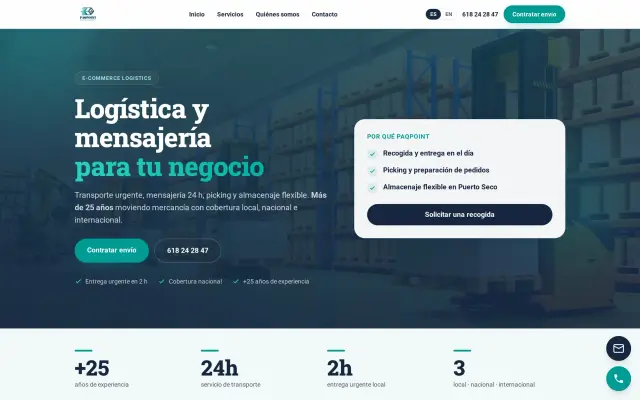
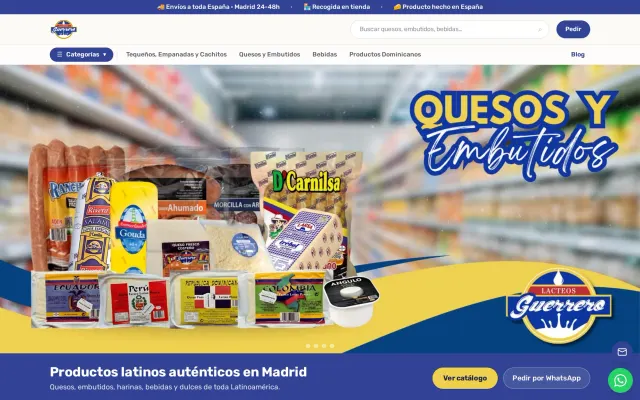
What matters about your website isn't that it's pretty, but that it works: that's why we integrate online shop and wholesale enquiries, products and range and products and range, so every visit has something clear to do and ends up a customer.

We design your website to measure — no empty templates — responsive (perfect on mobile, where nearly all your visits are), fast and easy to update yourself. You choose whether you manage it or we handle maintenance.

An invisible website is useless. We work the local SEO of your artisan charcuterie company — copy, speed, Google Business Profile and reviews — so you appear right when a customer in your city needs you. And with Google Ads, from day one too.
In brief: web design for artisan charcuterie producers

  • Not a brochure but a tool: it takes enquiries while you are working.
  • Design that earns trust: for artisan charcuterie producers the first impression happens online.
  • Domain, content and logins stay in your name: you ask nobody's permission the day you want to change something.
  • We write the copy after a conversation about your work — an hour of your time, and it is the part that sells.

⚙️ Not just a website, a tool

A website for an artisan charcuterie company is not a brochure: it is where somebody decides whether to call you. Everything on it should serve that one decision.

What your website includes

Curing, month by month

How long each piece takes and what is lost along the way.

What is in it, and what is not

Nitrites, allergens and a short list anybody can read.

Shipping in summer

How it travels, how many days it holds, and nobody home.

Trade orders

Minimum quantity, format and reserving from a curing batch.

Visiting the curing room

When you can come, how long it takes, tasting or not.

Found by cut and origin

Somebody searching «acorn-fed chorizo» reaches your workshop.

How we work with artisan charcuterie producers, step by step

  1. 1

    We look at your business

    We go over how artisan charcuterie producers actually work, what you sell and who you compete with locally.

  2. 2

    Structure and content

    We write in your words rather than advertising words, and cut anything nobody reads.

  3. 3

    Design and build

    We set type, contrast and sizes so the site still reads in bright sun and at sixty.

  4. 4

    Launch and Google

    We test every form from the outside before launch — an enquiry must never fall into a void.

  5. 5

    Handed over working

    We hand over the access to your Google profile and the analytics, not just the website.

Frequently asked questions about web design for artisan charcuterie producers

Should the ingredient list be the argument? +

It is the sharpest one available. Naming what is in it, and what is not, next to a supermarket equivalent explains the price without a single adjective about tradition.

Is summer a lost season? +

Only if it is not planned for. Explaining how orders travel in July, which products cope and when dispatch pauses turns a limitation into evidence that the producer knows what they are doing.

Does the curing room convert visitors? +

More than any photograph. Somebody who has stood in the room and smelled it buys differently afterwards, and the visit costs almost nothing to offer.

Should trade and retail share a site? +

Separate routes, one identity. A delicatessen buying by the case needs prices and lead times, while a household needs a description and a delivery date.

Do we need an online shop from day one? +

Not necessarily. A page per product with a way to order by phone or form sells while you decide whether shipping is worth it.

How do we explain shipping honestly? +

Say which days you ship, what the parcel costs and how it travels chilled. Vagueness there is what empties the basket.

Should certifications be on the site? +

Organic, PDO, food safety: with the certificate number and the date. It is what a professional buyer checks first.

Can we sell by subscription? +

Yes: a weekly or monthly box with automatic payment and a pause for holidays. It is the steadiest income in this sector and the one that holds up best out of season.

Will the website be mine? +

Yes, 100%. The domain, hosting and content stay in your name when we finish. And we leave it with a simple panel so you can update photos, prices or services for your artisan charcuterie company whenever you want.

Can I integrate bookings, WhatsApp or payments? +

Yes. We connect your website with online shop and wholesale enquiries, a WhatsApp button, Google Maps, social media and — if you need it — online payments, so your artisan charcuterie company receives and manages customers from one place.

What are the running costs each year? +

Domain and hosting stay modest and we state them upfront. Everything else is optional: you decide whether to make changes yourself or hand them to us.

Much more than a website

Not just your website. Your store and customers in one panel.

Orders and email campaigns to build loyalty and sell again — all under your brand.

Customer CRM

Every contact that comes through your website lands in your panel, with follow-up and notes. Nothing gets lost.

Bookings & appointments

Online diary with automatic reminders. Your customers book themselves, you see your calendar fill up.

Email marketing

Your own campaigns and lists to build loyalty and sell again, with no paid external tools.

AI assistant

A smart chat serves and captures customers on your website 24/7, and passes the interested ones to your CRM.

Clear analytics

How many visit you and where they come from, with no jargon or annoying cookies. Decisions backed by data.

All under your brand, in one place.

I want my panel
Real projects

Sites of ours that are already up and running

Out of respect for our clients we show each project by its sector and city, with no names.

See the full portfolio →

Ready for a website that works?

Tell us about your artisan charcuterie company and we'll prepare a no-obligation quote.

We reply within 24 hours · No obligation

WhatsApp ·