Home & renovation · TePublico.NET

Web design for bricklayers

Half the people never ring, assuming small jobs interest nobody.

Two very different customers land on the same page: the one with a leak this morning and the one planning a bathroom for the spring. The first wants a phone number, the second wants photos and a price range.

References are the strongest currency here: before and after, with the town, the time it took and roughly what it cost. That convinces faster than any about-us page, and it filters enquiries down to the work you actually want.

Half the enquiries die on geography: people want to know whether you come out to their town at all. A plain list of the areas you cover, and the name of whoever turns up, filters out the trips you were never going to make.

How long it takes and how much mess it makes are the questions behind every enquiry. A realistic timeline, and what happens to the kitchen or the bathroom while the work runs, closes the jobs that a price alone leaves hanging.

«Do you take small jobs or only full renovations?» Half the people never ring, assuming it is not worth a tradesman's time. Which half-day jobs get taken on and which are not worth anybody's morning, what call-out minimum applies and how several small things get grouped into one visit, what a morning's work costs with materials, and why bundling three small repairs is far cheaper than three separate visits.

«Who coordinates the plumber and the electrician?» A small job with three uncoordinated trades takes three times as long. Who runs the site when several firms are involved, whether the company brings its own or the client hires each one, in what order each trade works and what holds everything up when that changes, and who answers when one trade damages the previous one's work.

«How do I know the quote will not grow halfway through?» That fear is what makes somebody collect five quotes and choose none. What a serious quote must contain — measurements, named materials, explicit exclusions — which surprises are common once a wall is opened and how they are handled before carrying on, what variance is reasonable and what is not, and how any extra work gets approved before it is done.

The week in the house is what people actually buy. Dust control, which room stays usable, what time work starts and when the water goes off: a builder who describes that gets chosen over one who is fifty pounds cheaper.

Every site we design for bricklayers is built to convert: online quote requests, services (brickwork, extensions) and services (brickwork, extensions), with an experience so simple your customer books or gets in touch without hesitating.

No recycled templates: we start from your brand, your colours and your photos to create a unique website for your bricklaying company, responsive and lightning-fast. And we leave it ready for you to edit without any technical know-how.

A pretty website is no use if no one finds it. That's why your page is built optimised for SEO and local rankings: when someone searches for your bricklaying company in your city, you show up. We can also run your Google Business Profile and Google Ads campaigns.
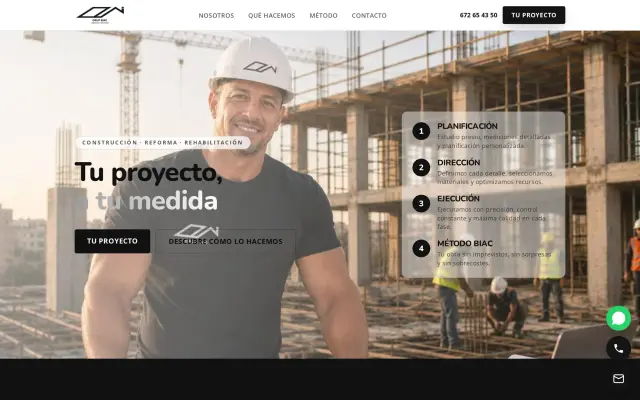
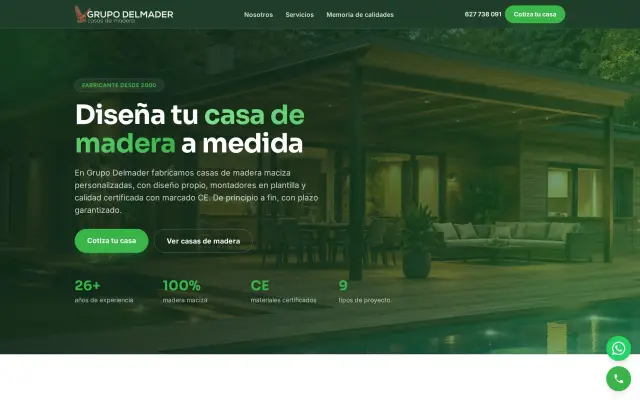
In brief: web design for bricklayers

  • A privacy policy and a cookie notice that loads only what is needed are part of the job, not of your to-do list.
  • Domain and hosting are stated upfront; everything else is optional and you decide who handles it.
  • You change texts, prices and photos yourself from a simple panel, with no technical know-how.
  • Remote work with bricklayers anywhere, over 15 years of experience and a price agreed up front.

⚙️ Not just a website, a tool

You own it and you run it. Texts, prices and photos change from a panel, without depending on anyone and without waiting.

What your website includes

Small jobs and half-day work

Call-out minimums and grouping several fixes.

Who coordinates the other trades

Order of work and who answers when it clashes.

Quotes that hold to the end

What must be written down and how extras get approved.

Dust, access and living in the house

What the week actually looks like.

Rubbish, skips and making good

Where the debris goes and who pays for the tip.

Found by job and by building type

Somebody searching «open a doorway in a load-bearing wall» finds you.

How we work with bricklayers, step by step

  1. 1

    We look at your business

    We go through the sites ranking above you and work out where they are weak.

  2. 2

    Structure and content

    We settle what shows without scrolling: the important thing first, everything else below it.

  3. 3

    Design and build

    We watch the loading time: real photographs, properly compressed, no scripts you do not need.

  4. 4

    Launch and Google

    We redirect the old addresses properly, so nothing that already ranks is thrown away.

  5. 5

    Handed over working

    We hand over the access to your Google profile and the analytics, not just the website.

Frequently asked questions about web design for bricklayers

Do you work on older or listed buildings? +

Say it plainly, with what changes: lime rather than cement, consent where it is needed, and materials matched to what is there. Owners of older houses are wary of exactly the wrong answer.

How soon could you start? +

Give a realistic lead time and update it. A firm that says six weeks and means it wins work from one that says «soon» and disappears.

Do you plaster as well? +

Say where your work stops and who picks it up. Homeowners want to know how many companies they will be dealing with before they commit to the first one.

Do we have to show prices? +

A range per type of job is enough — bathroom, kitchen, full flat — with what is included. It removes the calls that were never going to be your work.

How many projects should the gallery show? +

Eight to twelve, well photographed, beats fifty snapshots. Each one with the town, how long it took and roughly what it cost.

Do we need the customer's permission to show a job? +

In writing, however brief. We file the permission with the photographs, which saves taking a project down two years later.

Can we publish jobs from the phone? +

Yes, and that is the point: a photo, the town and two lines, done in the van before driving off. One job a week beats a gallery built once a year and never touched again.

Can you keep my current domain? +

Yes, and we prefer it. Losing a domain that has been printed on vans and business cards costs more than any redesign gains.

Do you need my logo files? +

If they exist, yes. If they do not, we work with what there is and tell you honestly when the logo is holding the rest back.

Will the site be fast on a bad connection? +

That is a build decision, not an add-on. Compressed images and no unnecessary scripts matter most exactly where coverage is worst.

Much more than a website

Not just your website. Your panel so no quote is lost.

Every request lands in your CRM with appointments and follow-up — you reply fast and close more.

Customer CRM

Every contact that comes through your website lands in your panel, with follow-up and notes. Nothing gets lost.

Bookings & appointments

Online diary with automatic reminders. Your customers book themselves, you see your calendar fill up.

Email marketing

Your own campaigns and lists to build loyalty and sell again, with no paid external tools.

AI assistant

A smart chat serves and captures customers on your website 24/7, and passes the interested ones to your CRM.

Clear analytics

How many visit you and where they come from, with no jargon or annoying cookies. Decisions backed by data.

All under your brand, in one place.

I want my panel
Real projects

Sites of ours that are already up and running

Out of respect for our clients we show each project by its sector and city, with no names.

See the full portfolio →

Ready for a website that works?

Tell us about your bricklaying company and we'll prepare a no-obligation quote.

We reply within 24 hours · No obligation

WhatsApp ·