Home & renovation · TePublico.NET

Web design for furniture restorers

The unspoken question is always the same: is it worth it? Answering that first removes most of the need to discuss technique.

Two very different customers land on the same page: the one with a leak this morning and the one planning a bathroom for the spring. The first wants a phone number, the second wants photos and a price range.

References are the strongest currency here: before and after, with the town, the time it took and roughly what it cost. That convinces faster than any about-us page, and it filters enquiries down to the work you actually want.

Half the enquiries die on geography: people want to know whether you come out to their town at all. A plain list of the areas you cover, and the name of whoever turns up, filters out the trips you were never going to make.

How long it takes and how much mess it makes are the questions behind every enquiry. A realistic timeline, and what happens to the kitchen or the bathroom while the work runs, closes the jobs that a price alone leaves hanging.

Almost every enquiry carries the same unspoken question: is it worth it, or should I just buy new. Saying when a piece deserves the work, when the value is mainly sentimental and when to advise against it honestly wins the jobs where price stops mattering.

On an old piece the real fear is losing value. The difference between conservative restoration and refinishing or painting, which interventions are reversible, and what happens to original hardware and patina separates you from any furniture makeover.

Nobody can price without seeing the piece, but the route to a price can be described. Photographs first, what an assessment costs and whether it is credited, ranges for the commonest work and the point at which a fixed price becomes possible.

Transport frightens people more than the work does. Whether you collect, how a wardrobe leaves a third-floor flat, what insurance covers a piece in your workshop and how long it stays there is what decides a nervous owner to go ahead.

We think of your website as another team member: with online enquiries and quotes working 24/7, plus before-and-after gallery and services and pieces. You focus on your furniture restoration workshop; the website handles capturing and serving.

We work with the technology that best fits your furniture restoration workshop: WordPress, WooCommerce or bespoke development, always with a fast, secure and easy-to-manage website. We hand it over ready and, if you want, train you to run it yourself.

Your website will appear on Google when people search for a furniture restoration workshop in your area, because we design it optimised for local rankings from the ground up. A website that gets found and converts: that's the plan.
In brief: web design for furniture restorers

  • A clear way to get in touch — WhatsApp, phone and form — so no enquiry is lost.
  • Built for Google from the ground up, so people find you rather than merely visit.
  • You change texts, prices and photos yourself from a simple panel, with no technical know-how.
  • Perfect on a phone: that is where furniture restorers get found, and where the decision is made.

⚙️ Not just a website, a tool

You own it and you run it. Texts, prices and photos change from a panel, without depending on anyone and without waiting.

What your website includes

Worth restoring, or not

An honest answer before any technique is discussed.

When it is not about the money

The piece that is being kept for a reason no valuation covers.

Woodworm, and what it means

Active or old, treatable or structural, and how we tell.

French polish, wax or lacquer

What each looks like, what each survives, and what each costs.

Veneer, missing pieces and matching

Finding timber that will match something made in 1890.

Collection, and how long we keep it

Getting it here, and the weeks it sits in the workshop.

How we work with furniture restorers, step by step

  1. 1

    We look at your business

    We check what can be kept from your current site — text, photos, the domain — and what has to go.

  2. 2

    Structure and content

    We decide the pages, the wording and what has to be visible first for someone to get in touch.

  3. 3

    Design and build

    We watch the loading time: real photographs, properly compressed, no scripts you do not need.

  4. 4

    Launch and Google

    We look at the numbers after four weeks and fix the places where visitors drop out.

  5. 5

    Handed over working

    We hand over the access to your Google profile and the analytics, not just the website.

Frequently asked questions about web design for furniture restorers

Should a price guide be published? +

A range per type of job, with what changes it. Nobody knows whether a chair costs thirty pounds or three hundred, and that uncertainty is what stops the message being sent at all.

Is a free assessment worth offering? +

From a photograph, yes. Two pictures and a question answers most enquiries in a sentence, and it turns the ones worth doing into a booking without either side wasting a journey.

Do process photographs help? +

They are the most persuasive thing the workshop owns. Stripped, repaired and finished, in that order, explains a price that a finished photograph alone always makes look high.

Should the workshop turn work away? +

In writing, and it wins trust. Saying which pieces are not worth restoring, and what to do with them instead, is the advice people repeat to other people.

Do we have to show prices? +

A range per type of job is enough — bathroom, kitchen, full flat — with what is included. It removes the calls that were never going to be your work.

How many projects should the gallery show? +

Eight to twelve, well photographed, beats fifty snapshots. Each one with the town, how long it took and roughly what it cost.

Do we need the customer's permission to show a job? +

In writing, however brief. We file the permission with the photographs, which saves taking a project down two years later.

Can we publish jobs from the phone? +

Yes, and that is the point: a photo, the town and two lines, done in the van before driving off. One job a week beats a gallery built once a year and never touched again.

Do you work with customers abroad? +

Yes. We handle the whole project remotely, fast and conveniently, with furniture restorers across the English-speaking world.

What if I already have a dated website? +

We redesign it while keeping your rankings: we refresh the look, speed and online enquiries and quotes, taking care of URLs and redirects so you don't lose the SEO you already have.

Will the website be mine? +

Yes, 100%. The domain, hosting and content stay in your name when we finish. And we leave it with a simple panel so you can update photos, prices or services for your furniture restoration workshop whenever you want.

Much more than a website

Not just your website. Your panel so no quote is lost.

Every request lands in your CRM with appointments and follow-up — you reply fast and close more.

Customer CRM

Every contact that comes through your website lands in your panel, with follow-up and notes. Nothing gets lost.

Bookings & appointments

Online diary with automatic reminders. Your customers book themselves, you see your calendar fill up.

Email marketing

Your own campaigns and lists to build loyalty and sell again, with no paid external tools.

AI assistant

A smart chat serves and captures customers on your website 24/7, and passes the interested ones to your CRM.

Clear analytics

How many visit you and where they come from, with no jargon or annoying cookies. Decisions backed by data.

All under your brand, in one place.

I want my panel
Real projects

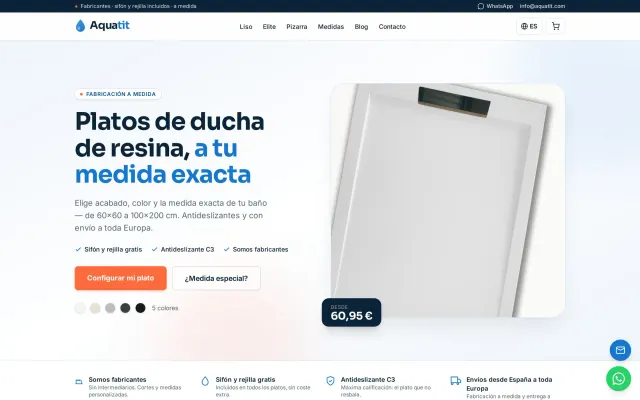
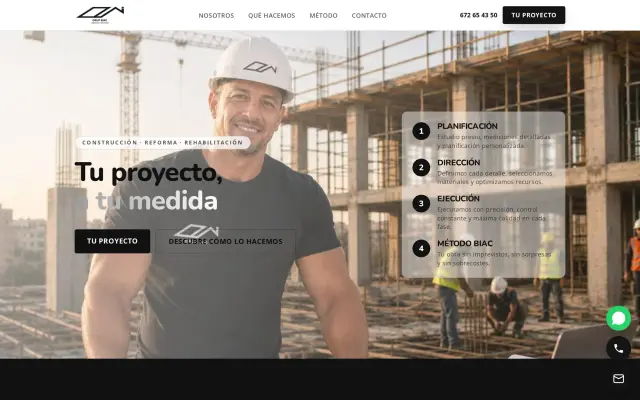
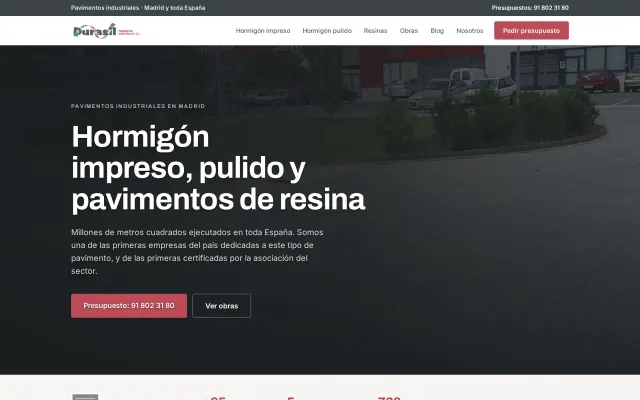
Sites of ours that are already up and running

Out of respect for our clients we show each project by its sector and city, with no names.

See the full portfolio →

Ready for a website that works?

Tell us about your furniture restoration workshop and we'll prepare a no-obligation quote.

We reply within 24 hours · No obligation

WhatsApp ·