Food & agriculture · TePublico.NET

Web design for mussel farms

Before flavour comes the worry: will they arrive alive? That answer is the first order.

In direct sales it is provenance that decides, not price: the farm, the method, the season. Telling that story sells to the people who are deliberately avoiding the supermarket shelf.

Delivery is the first point where the basket gets abandoned: the cold chain, the transit time, what happens in a heatwave. Explained honestly, it stops being a reason to leave.

Two buyers read the same page: the family ordering a box and the shop ordering a pallet. Minimum order, formats and lead time told apart stop each of them wasting the other's time.

Say where else you can be found: which markets, which shops, which restaurants use it. That list is proof, and it catches the customer who searches for the shop before they search for the farm.

Whether they arrive alive, and how long they keep, is what stops a first order and is written almost nowhere. Chilled rather than frozen, hours to the door, kept in the fridge under a damp cloth and never in water or a sealed bag, and how many days that holds before it stops being worth eating.

Nobody explains how to tell a dead one, and that is exactly where the complaint comes from. Closed means alive, half-open closes again if tapped, wide open goes in the bin, and after cooking anything still shut is discarded: four lines that prevent a refund and keep a customer for a year.

Size changes month to month because the rope has a cycle and the ria decides. Saying which months the shell is full, when spawning leaves them lean, and that this is the farming calendar rather than a drop in quality, makes somebody wait for the good month instead of changing supplier.

Say what a restaurant needs that a household does not: crate sizes, the cut-off time for next-day delivery, whether you can hold a standing weekly order, and what happens to it in the weeks the harvest is closed. That is a different page, and it is the one that pays.

Your mussel farm website isn't just a shop window: it includes online orders and wholesale enquiries and everything your business needs — products and harvest — integrated and easy to manage. Fewer calls, fewer gaps in your calendar, more customers.

A website that loads in a blink, looks perfect on mobile and conveys the professionalism of your mussel farm at first glance. Custom design, clean code and a simple panel so you stay in control.

Reviews and your Google profile decide many visits to a mussel farm. We work your Google Business Profile, reviews and website SEO together, so when people search for you in your city, you appear — first and well rated.
In brief: web design for mussel farms

  • Domain, content and logins stay in your name: you ask nobody's permission the day you want to change something.
  • Your own photographs beat any stock library; where they are missing we say so rather than paper over it.
  • A clear way to get in touch — WhatsApp, phone and form — so no enquiry is lost.
  • If something goes down, yesterday's backup takes over: phone number and address are reachable again in minutes.

⚙️ Not just a website, a tool

You own it and you run it. Texts, prices and photos change from a panel, without depending on anyone and without waiting.

What your website includes

Arriving alive, and how

Packing, ice and the hours between the rope and your kitchen.

On the rope, and how long they grow

Eighteen months hanging in the water, and what that does.

Purification, and the days after harvest

What happens between the sea and the sale.

Closed for algae

Why harvesting stops sometimes, and what it protects.

Rope-grown against dredged

Two very different products sold under one word.

The ones that stay shut

What to do with them, and what it actually means.

How we work with mussel farms, step by step

  1. 1

    We look at your business

    We go over how mussel farms actually work, what you sell and who you compete with locally.

  2. 2

    Structure and content

    We decide the pages, the wording and what has to be visible first for someone to get in touch.

  3. 3

    Design and build

    We build it fast and mobile-first, with your brand and a clear route to contact.

  4. 4

    Launch and Google

    We look at the numbers after four weeks and fix the places where visitors drop out.

  5. 5

    Handed over working

    The domain and the hosting stay in your name — you can take the site elsewhere whenever you want.

Frequently asked questions about web design for mussel farms

What decides the first order? +

Whether they will arrive alive. Everything about flavour is irrelevant until that is answered, so packing, timing and what to do on arrival belong at the top of the page.

Should rope-grown be distinguished from dredged? +

It is the difference the customer is paying for. Grit, shell thickness and yield are not the same, and a producer who explains it is not competing on price with a different product.

Does the closed season need explaining? +

It builds trust rather than losing sales. Saying that harvesting stops for algae, and that this is monitoring working correctly, reassures anybody who has heard a shellfish story.

Is the myth about closed shells worth addressing? +

It is the question every household asks. A short, correct explanation of which ones to discard prevents both illness and the belief that a whole batch was bad.

Do we need an online shop from day one? +

Not necessarily. A page per product with a way to order by phone or form sells while you decide whether shipping is worth it.

How do we explain shipping honestly? +

Say which days you ship, what the parcel costs and how it travels chilled. Vagueness there is what empties the basket.

Should certifications be on the site? +

Organic, PDO, food safety: with the certificate number and the date. It is what a professional buyer checks first.

Can we sell by subscription? +

Yes: a weekly or monthly box with automatic payment and a pause for holidays. It is the steadiest income in this sector and the one that holds up best out of season.

What are the running costs each year? +

Domain and hosting stay modest and we state them upfront. Everything else is optional: you decide whether to make changes yourself or hand them to us.

And the privacy policy? +

It is part of the job, along with a cookie notice that loads only what is needed. We set both up rather than leaving them on your desk.

Who writes the texts if my English is not perfect? +

We do, and then you read them aloud. If a sentence does not sound like you, it does not stay — the site has to survive a customer quoting it back.

Much more than a website

Not just your website. Your store and customers in one panel.

Orders and email campaigns to build loyalty and sell again — all under your brand.

Customer CRM

Every contact that comes through your website lands in your panel, with follow-up and notes. Nothing gets lost.

Bookings & appointments

Online diary with automatic reminders. Your customers book themselves, you see your calendar fill up.

Email marketing

Your own campaigns and lists to build loyalty and sell again, with no paid external tools.

AI assistant

A smart chat serves and captures customers on your website 24/7, and passes the interested ones to your CRM.

Clear analytics

How many visit you and where they come from, with no jargon or annoying cookies. Decisions backed by data.

All under your brand, in one place.

I want my panel
Real projects

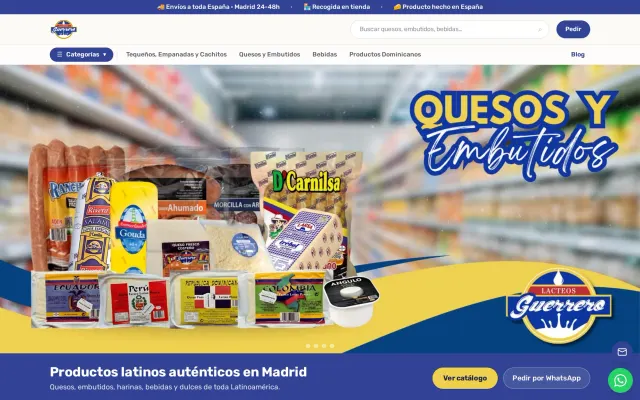
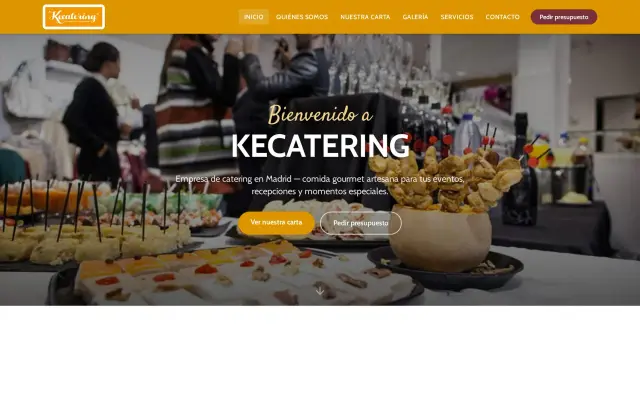
Sites of ours that are already up and running

Out of respect for our clients we show each project by its sector and city, with no names.

See the full portfolio →

Ready for a website that works?

Tell us about your mussel farm and we'll prepare a no-obligation quote.

We reply within 24 hours · No obligation

WhatsApp ·