Web design · Health & wellbeing

Web design for dyslexia support centres

Families arrive after a year of poor marks. The first answer is whether it is that or not.

Someone looking for a practice is usually in pain and short on patience. They want to know whether you treat this, when there is an appointment, and what will actually happen — in that order, and without having to ring.

Trust comes before price: a team with faces, real qualifications, honest reviews and a plain description of how a session goes. That is exactly what people check before they book.

Insurers, refunds and what a first session actually includes decide more visits than any explanation of the technique. Written on the page, they save the phone call most people never make.

Who you treat matters as much as what you treat: children, athletes, older patients, pregnancy, people who are nervous about it. Saying so plainly brings the right patient and spares the one you cannot help.

«Is it dyslexia or does he just find reading hard?» is the doubt a family arrives with after a year of poor marks. What is assessed and how, from what age it makes sense, what separates a learning difficulty from lack of practice, and that walking out with «it is not dyslexia» is also a useful and common result.

Whether the report is any use at school is the practical question the appointment hangs on. Which document is handed over, which adjustments a school usually grants with it, who has to present it and when in the school year, and what to do when the school says it cannot apply anything.

«How many sessions, and does it really improve?» — promising here is what destroys a family's trust. Sessions a week and over how many months work usually runs, what genuinely improves and what is compensated with strategies rather than cured, when it shows at home before it shows in marks, and what is asked of parents between sessions.

Explain what happens in secondary school and beyond. Exam adjustments, foreign languages and the point at which a teenager wants to handle it themselves: families are deciding whether this is a year of help or a decade of it.

We think of your website as another team member: with online enquiries and appointments working 24/7, plus progress and results and assessments and support. You focus on your dyslexia support centre; the website handles capturing and serving.

We work with the technology that best fits your dyslexia support centre: WordPress, WooCommerce or bespoke development, always with a fast, secure and easy-to-manage website. We hand it over ready and, if you want, train you to run it yourself.

We position you where your customers are: on the first page of Google and on the map, for searches for your dyslexia support centre in your area. Local SEO done well today is what fills your calendar tomorrow.
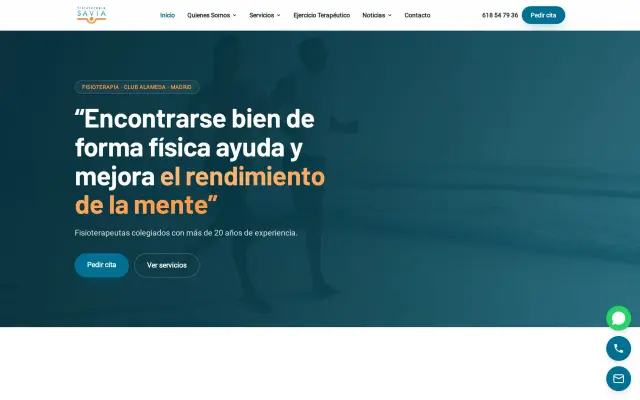
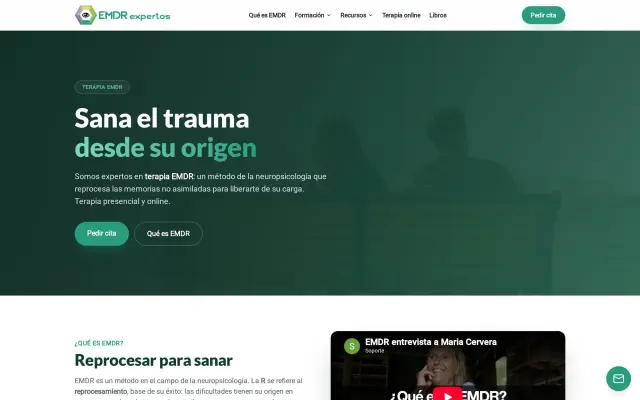
In brief: web design for dyslexia support centres

  • Domain, content and logins stay in your name: you ask nobody's permission the day you want to change something.
  • You change texts, prices and photos yourself from a simple panel, with no technical know-how.
  • A privacy policy and a cookie notice that loads only what is needed are part of the job, not of your to-do list.
  • Not a brochure but a tool: it takes enquiries while you are working.

⚙️ Not just a website, a tool

A website for a dyslexia support centre is not a brochure: it is where somebody decides whether to call you. Everything on it should serve that one decision.

What your website includes

The assessment and what is tested

The minimum age, and the time the assessment needs.

A report the school can use

Which adjustments it usually secures.

Support week by week

How many sessions and over what period.

What parents do at home

What is expected between sessions and what is not.

When it is not dyslexia

What is found instead and where you are referred.

Found by what you noticed

Somebody searching «reads very slowly» finds a bearing.

How we work with dyslexia support centres, step by step

  1. 1

    We look at your business

    We check what can be kept from your current site — text, photos, the domain — and what has to go.

  2. 2

    Structure and content

    We write in your words rather than advertising words, and cut anything nobody reads.

  3. 3

    Design and build

    We build for the phone first, because that is where most of your visitors decide.

  4. 4

    Launch and Google

    We test every form from the outside before launch — an enquiry must never fall into a void.

  5. 5

    Handed over working

    You get the panel, we show you how to use it, and we stay available for whatever comes up.

Frequently asked questions about web design for dyslexia support centres

Should the assessment and the teaching be separated? +

They are two purchases and two decisions. Some families want only to know, and others want weekly support afterwards, and mixing the two into one offer loses the ones who are not ready.

Do exam arrangements need their own explanation? +

They are the most practical reason to assess. Extra time and other access arrangements have deadlines and evidence requirements, and a centre that explains them is the one a secondary school parent rings.

How should the site handle a negative result? +

As a useful outcome, not a failure. Saying clearly that many assessments find something else, and that the report is still worth having, keeps families who would otherwise avoid the risk.

Is adult assessment worth offering? +

It is a quiet and growing market. Adults diagnosed late come for workplace adjustments or university support, they decide alone and quickly, and almost every centre advertises only to parents.

What are we allowed to publish? +

Treatments, prices and the practitioner's credentials, yes. Patient photographs and testimonials need written consent, and we set that up rather than assume it.

Can patients book without registering? +

Yes, with name, phone and reason for the visit. Anything more and half of them abandon before finishing.

Can we publish treatment prices? +

A from-price with what it includes. It stops the calls that were only ever asking, and the regulator has no issue with it.

Where is the data stored? +

In Europe, with consent taken before anything is sent and nothing clinical in the form. Asking for the reason for the appointment in free text is the sensible limit.

What are the running costs each year? +

Domain and hosting stay modest and we state them upfront. Everything else is optional: you decide whether to make changes yourself or hand them to us.

And the privacy policy? +

It is part of the job, along with a cookie notice that loads only what is needed. We set both up rather than leaving them on your desk.

Who writes the texts if my English is not perfect? +

We do, and then you read them aloud. If a sentence does not sound like you, it does not stay — the site has to survive a customer quoting it back.

Much more than a website

Not just your website. Your practice's diary and CRM.

Online appointments with reminders, every patient's record and automatic alerts that cut no-shows.

Customer CRM

Every contact that comes through your website lands in your panel, with follow-up and notes. Nothing gets lost.

Bookings & appointments

Online diary with automatic reminders. Your customers book themselves, you see your calendar fill up.

Email marketing

Your own campaigns and lists to build loyalty and sell again, with no paid external tools.

AI assistant

A smart chat serves and captures customers on your website 24/7, and passes the interested ones to your CRM.

Clear analytics

How many visit you and where they come from, with no jargon or annoying cookies. Decisions backed by data.

All under your brand, in one place.

I want my panel
Real projects

Sites of ours that are already up and running

Out of respect for our clients we show each project by its sector and city, with no names.

See the full portfolio →

Ready for a website that works?

Tell us about your dyslexia support centre and we'll prepare a no-obligation quote.

We reply within 24 hours · No obligation

WhatsApp ·